The symptom is familiar: people sign up for community alerts, then miss the one notice that actually matters. In public sector and community notifications, that gap is easy to overlook because registration feels like success. It is not the same thing as making sure someone sees the message when it counts.
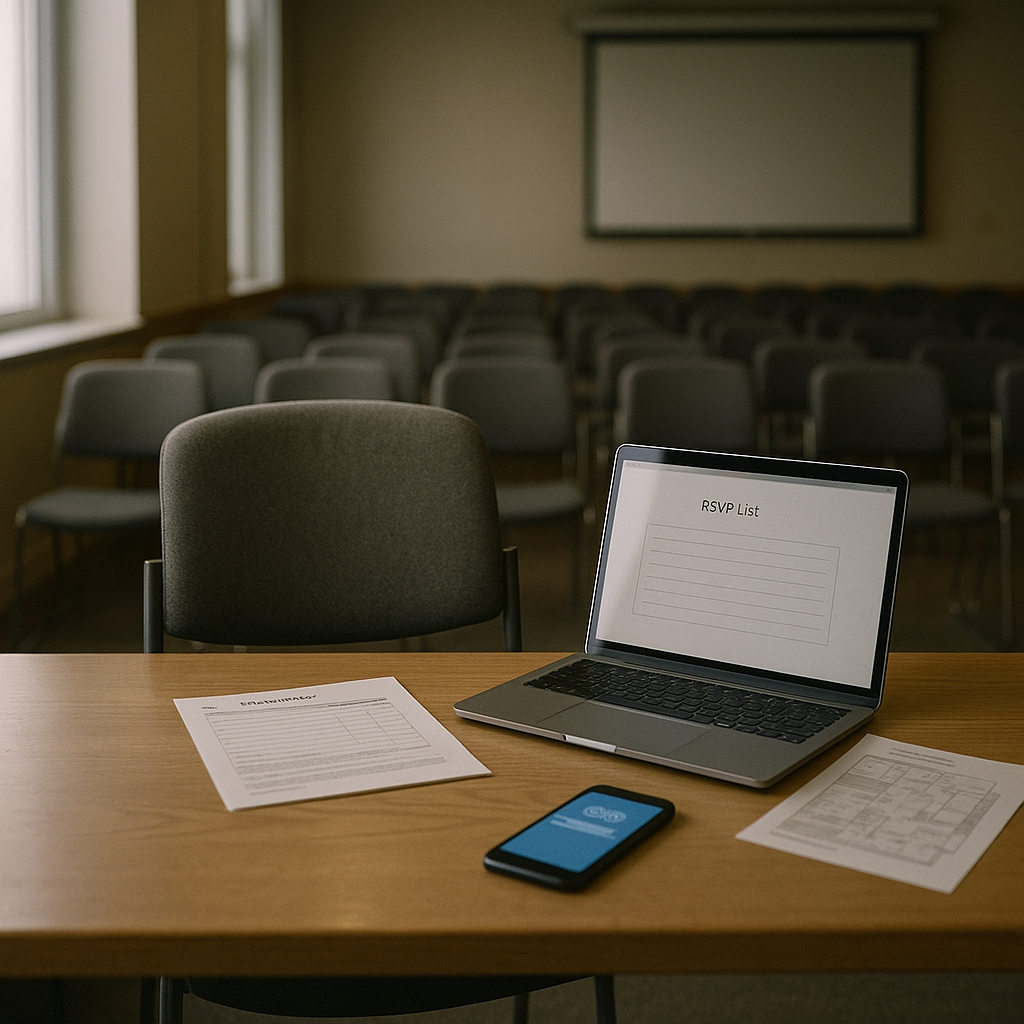
This is why public hearings, policy briefings, and citizen notifications need more than a single broadcast. A resident may register on a quiet afternoon, then ignore the first email because they are at work, and never catch the follow-up message that explains the timing, location, or change in status. The same pattern shows up in in-person events and physical rsvps, where the response looks healthy until the doors open and the room tells a different story.
the real gap is not awareness, it is attention at the right moment
Most notification systems are built around delivery. They can say a message was sent, and sometimes they can say it was opened. Neither answer tells you whether the person was in a place to act on it. That is the part that decides turnout.
For public notices, timing matters more than volume. A single message sent far in advance may be easy to miss. A message sent too late may be accurate but useless. The job of a reminder sequence is to bridge that middle space, the period after someone has opted in but before they are ready to pay attention. That is also why calendar-based communication has become its own channel, not just a support function. When a notice behaves like an appointment on the calendar, it has a better chance of being seen as something to act on, not something to skim. calendar marketing is useful here because it treats follow-up as part of the event itself, not an afterthought.
Manual follow-up can work for small lists, but it breaks down once the audience grows or the timing gets more specific. A generic reminder tool can also miss the point if it sends the same message to everyone. A resident who just registered needs different context from someone who received three notices already. That is where a sequence matters more than a blast. If you want the mechanics broken down, how the reminder sequence mechanism actually works, step by step shows why the order and spacing of messages matter as much as the message itself.
In government settings, there is another wrinkle. People often register for alerts when there is no immediate urgency. By the time an actual notice arrives, they may have forgotten why they signed up, or which channel they preferred. A useful sequence does not assume memory. It repeats the essentials, keeps the language plain, and gives the person a clear next step. That is especially important when the notice is time-sensitive, like a hearing change, a meeting update, or a local service alert.
The best sequences do not try to create urgency where none exists. They create continuity. A first message confirms the registration. A second message reinforces the specific event or notice. A final message arrives close enough to action time to be useful. Each touch has one job. Together, they close the gap between opting in and actually showing up.
That same logic applies outside government too. It shows up in public hearing rsvps that turn into empty chairs, where the audience was real but the room still was not. The details change across verticals, but the failure mode stays the same: registration creates a record, not attendance.
That is the part worth remembering. If the message only proves that someone raised a hand once, the work is still unfinished. The useful system is the one that keeps the hand-raiser connected long enough to become a participant.