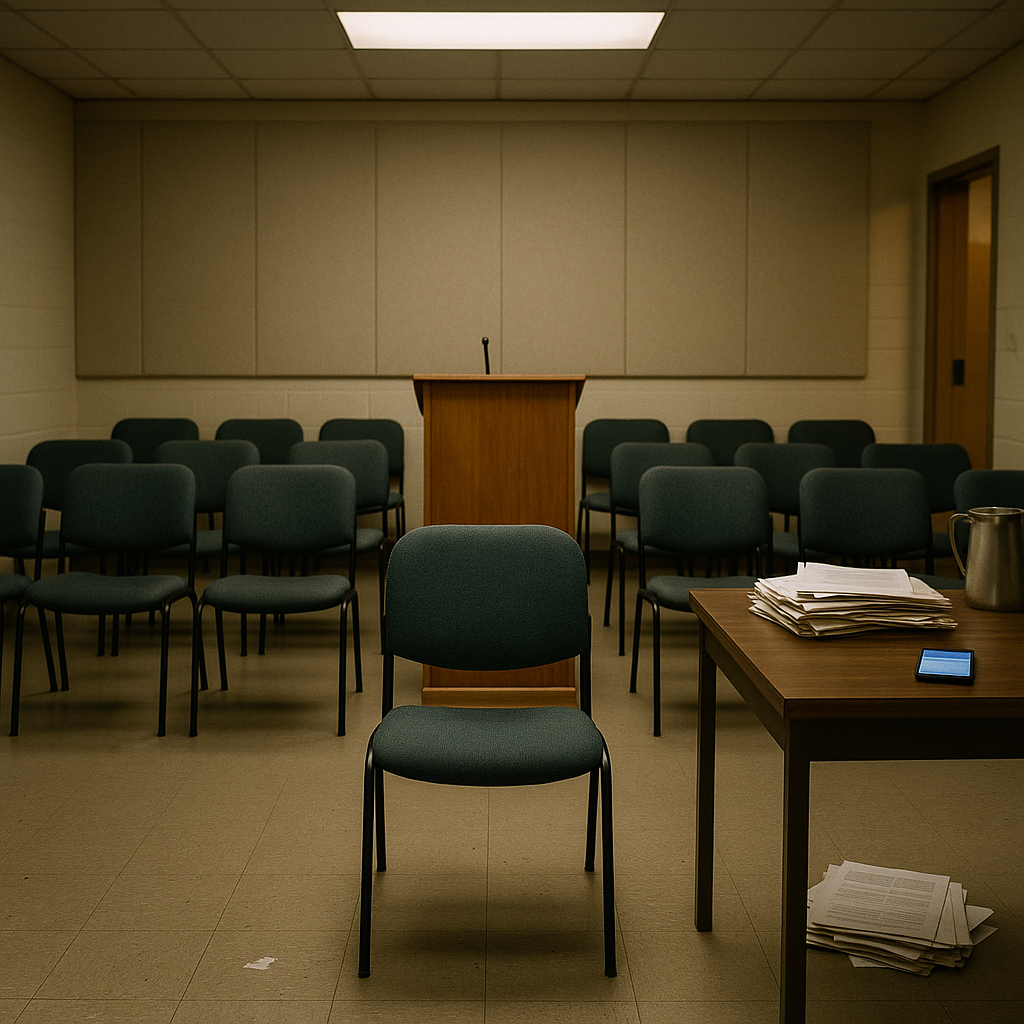
The symptom shows up in the room, not in the inbox. The hearing was posted, the registration count looked fine, and then the chairs stay open while the agenda starts on time.
That gap is familiar in public hearings, policy briefings, and citizen notifications. It is also easy to miss because the failure is not usually the first registration. The real drop happens later, after intent has already been recorded.
That is why the question is not whether people saw the notice. The question is whether they still remember it, still understand why it matters, and still know what time it is happening when the day gets noisy.
the problem is usually timing, not interest
In public sector work, a resident may register because the issue affects their street, their service, or their neighborhood. Then the day fills up. A shift runs long, school pickup moves, a transit delay appears, or the meeting competes with a dozen other obligations. By the time the hearing begins, the original intent has been crowded out.
That is the part many teams misread. They assume a no-show means weak interest. More often, it means the reminder system did not carry the person from intent to arrival. A single confirmation email rarely does that job well enough.
The same pattern shows up in live sessions and join rates, where registration is easy and attention is fragile. It also shows up in in-person events, physical rsvps and door counts, where a seat saved is not the same as a seat occupied.
The useful reframe is simple: a reminder is not just a nudge, it is a bridge. The bridge has to do three things. It has to restate the value of showing up, reduce friction around timing and access, and make the next step obvious without making the person hunt for it. That is what a reminder sequence is for. Not noise, just continuity.
how the reminder sequence mechanism actually works, step by step matters here because public meetings often depend on more than one message. One note a week out reaches the original registrant. Another closer to the event catches the people who forgot. A final same-day message helps when the meeting is live, virtual, or easy to miss in a crowded calendar. The point is not volume. The point is keeping the appointment visible long enough for it to survive the rest of the day.
Manual follow-up can do some of that, but only when the list is small and the stakes are high enough to justify the time. Once the audience grows, the problem becomes consistency. Messages go out late, some groups get more attention than others, and the reminder cadence starts to depend on whoever is checking the calendar.
That is where calendar marketing starts to make sense as a category. using reminder sequences as a marketing channel, not just an operations fix is not about turning a hearing into a campaign. It is about treating the appointment itself as something worth protecting. If a meeting matters enough to announce, it matters enough to remind well.
Public teams also run into a separate issue that looks small but matters a lot: different people need different levels of context. One resident needs the time and location repeated. Another needs the agenda link. Another needs a language or access note. A reminder sequence can carry that information in stages, instead of dumping everything into one overloaded message.
That is one reason the gap between registration and attendance is so persistent. The sign-up moment captures intent, but the days before the event are where life intervenes. If the reminder path does not account for that, the room will always look emptier than the registration sheet suggested.
For public hearings, the lesson is not to chase every name harder. It is to build a sequence that respects how people actually behave between yes and arrival. Sometimes that means one more message. Sometimes it means better timing. Often it means both.
There is a related version of this problem in webinar registrations that go quiet before start time, except the room is virtual and the excuse is often the same: life moved faster than the reminder did. Different format, same gap.
That gap is the real subject, whether the event is a council hearing, a community briefing, or a neighborhood update. Registration is only the beginning. Showing up is the part that changes what happens next.