
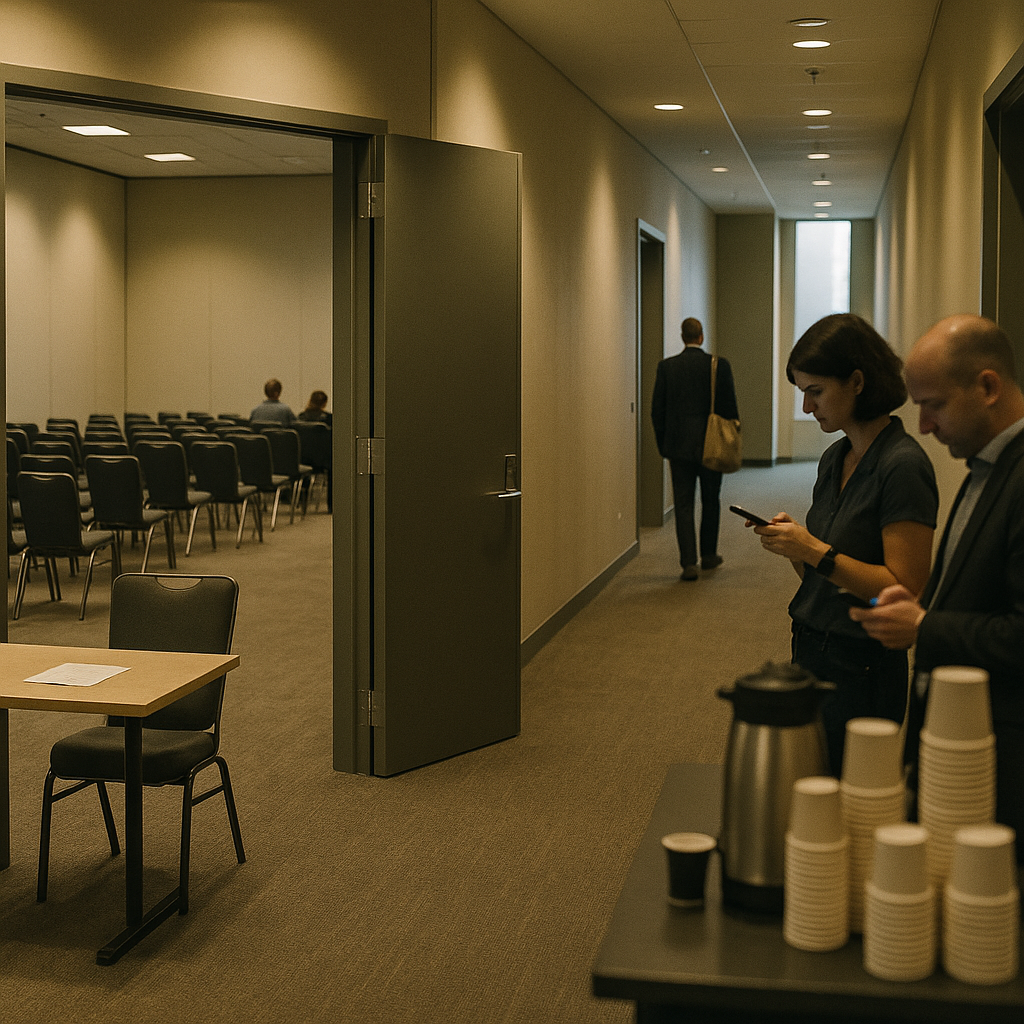
The symptom is easy to miss if you only look at registration numbers. Day one starts full, the first session has a crowd, then the room thins out by the afternoon or the next morning. In multi-day conferences and per-session reminders, that is the real attendance problem, not the signup form.
What makes this feel odd is that the people who disappear did not reject the event. They already said yes. They may have checked in, sat through one panel, and then quietly dropped off before the next one. The same thing happens in internal workshops and paid seminars, where a strong first session can hide the fact that the second and third touches are doing the actual attendance work.
the gap is between commitment and convenience
Conference planners often treat attendance as one decision. Someone registers, so the task seems done. But a multi-session event is really a chain of smaller decisions. Should I come back after lunch. Should I leave the office early tomorrow. Should I make the second session or skip it because the hallway conversation is easier.
That is why a reminder sequence matters more than a single confirmation. A reminder is not just a prompt to remember the event. It is a prompt to re-enter the plan. It helps the attendee reset their day, decide which session to return for, and see that the event still fits their schedule.
This is also where how the reminder sequence mechanism actually works, step by step becomes useful. The point is not more messages for their own sake. The point is to send the right nudge at the moment when the attendee is most likely to drift from intention to inertia.
For conferences, that usually means thinking in session blocks instead of one event page. A person who intended to attend the keynote may still need a separate prompt for the breakout after lunch. Another person may arrive on day one but needs a fresh reason to come back on day two. If you only remind them once at registration, you are assuming the decision stays stable. It rarely does.
The same pattern shows up in recurring class sessions and exam reminders. A student can mean to attend a course, miss one week, and then lose the thread. The calendar slot is not the problem. The missing bridge is.
one reminder is usually a booking artifact, not an attendance plan
A lot of teams rely on a single pre-event email because it is easy to send and easy to report on. It looks like outreach, but it behaves more like paperwork. It tells you the event exists. It does not help someone make the decision to show up when the day gets crowded.
That is why reminder cadence matters. A sequence can do different jobs at different points. One touch can orient the attendee. Another can confirm the plan. A later one can handle logistics, like timing, room changes, or the session they meant to catch after the keynote. Those are small details, but they are often the difference between a good intention and an empty seat.
For organizers, this is also where event communication starts to look less like operations and more like calendar marketing. You are not only protecting attendance. You are shaping which session gets chosen when the attendee has competing demands on the same day.
None of this means every no-show can be prevented. Some people will be pulled away by travel, work, or family obligations. But a lot of conference drop-off is softer than that. It comes from missed context, weak follow-through, and the absence of a timely nudge when the attendee is most likely to drift.
If you want to understand the gap more concretely, watch the spaces between sessions. That is where intent fades, where reminders have room to help, and where a conference either stays full or starts to hollow out.
It is a small shift in framing, but it changes the whole job. The question is not only who registered. It is who is still being carried from one session to the next.
For teams that manage recurring attendee drop-off, that is the work that matters.
For a related look at how this plays out when the schedule itself stretches too wide, see conference session turnout falls when the agenda is too wide.