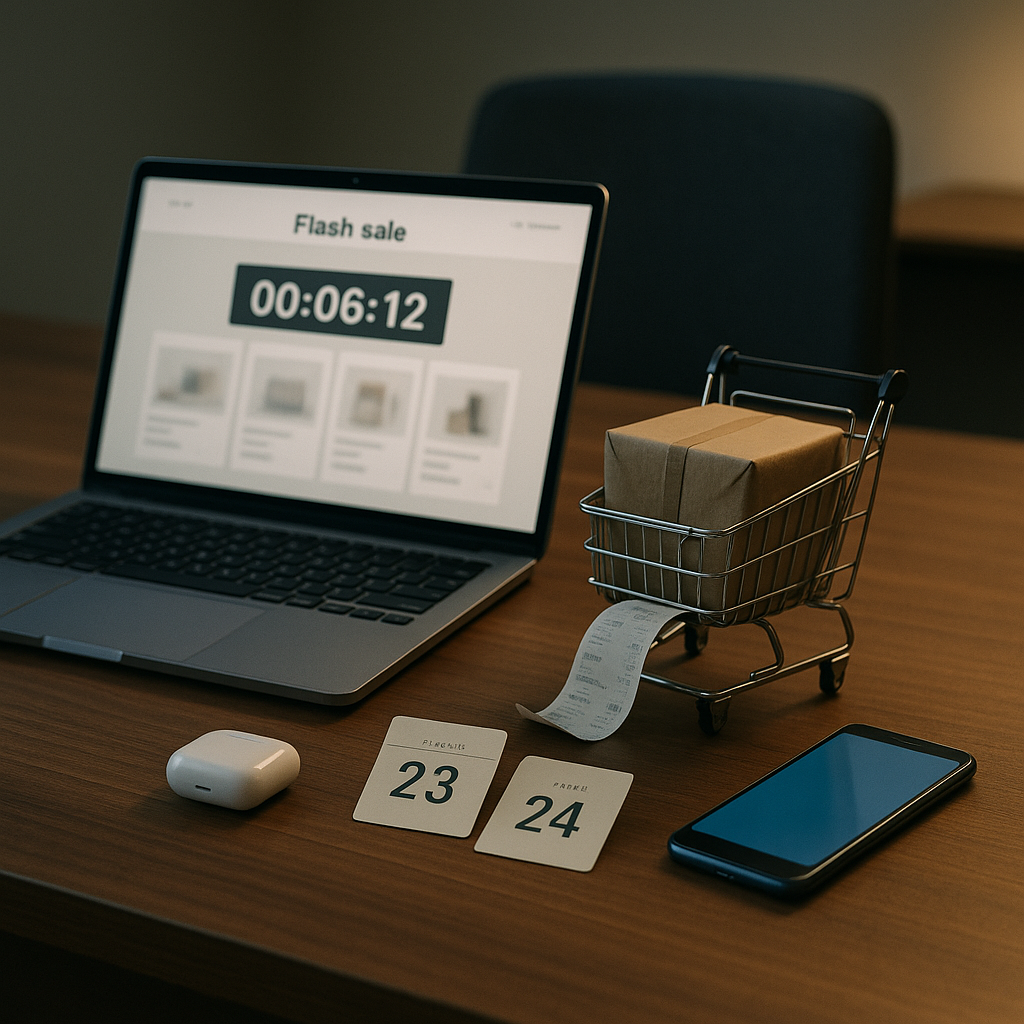
a flash sale can look healthy right up until the last hour, then the room gets quiet. carts sit open, tabs stay parked, and the people who clicked through early are the same people who never make it back before the timer runs out. that is the gap: a yes to the sale is not the same thing as a purchase.
in ecommerce, that gap is easy to miss because the trigger is already strong. the countdown is visible, the price is clear, and the intent is real enough to create traffic. but intent decays fast when the shopper has to remember the sale on their own. that is why flash sales belong with flash sales and drops treated like calendar events, not just as a homepage banner or a one-time discount code.
the problem is not interest, it is return behavior
most teams talk about flash sales as if the work is done when the sale goes live. in practice, that is only the start of the attendance problem. people often register the offer mentally, not operationally. they think, i will come back later. later is where the sale is usually lost.
that pattern is the same one you see in other scheduled moments. live sessions and join rates suffer when people mean to attend but never get a strong enough nudge to re-enter the event. the setting is different, but the behavior is the same. a promise in the moment does not survive a busy inbox, a changed tab, or a phone call unless the event comes back in front of the person at the right time.
for flash sales, that means the real job is not creating urgency once. it is creating return paths. one reminder before the sale starts, one as it opens, and one near the close do different work. the first gets the event onto the calendar. the second catches the people who intended to buy but lost track. the third helps recover the almost-buyer who needs a final nudge to finish the job.
that is why reminder sequences matter more than a single blast. a reminder sequence is not just repeated email. it is a timed set of touches that treats attention as something that drifts. if the first message starts interest, the next ones protect it from normal life. without that sequence, the sale depends on memory, and memory is a weak system when the window is short.
what changes when the sale is treated like a schedule
calendar thinking changes the way teams write and time each touch. instead of repeating the same offer, each message can answer a different question. the first says what is happening. the second says when it starts. the third says when it ends. that simple progression does more than repetition because it helps the shopper re-orient, not just re-read.
it also forces teams to admit that some people are not lost because they rejected the offer. they are lost because the offer disappeared from view. that is a different problem from low interest. it calls for a different fix. manual follow-up can work when the audience is tiny, but it does not scale when a sale is meant to create a concentrated burst of orders. a generic reminder tool can send messages, but it often stops at delivery instead of timing the right sequence around the moment people are most likely to act.
the same distinction shows up in demo bookings and campaign nurture cycles, where a booked slot or a clicked link still needs a second touch before it becomes a real conversation. the format changes, but the underlying lesson does not. saying yes is cheap. showing up, or checking out, asks for a better follow-through system.
there is also a measurement issue. a flash sale should not be judged only on traffic or opens. those are early signals, not outcomes. if the sale pulls attention but leaves too much money in abandoned carts, the problem may not be the offer at all. it may be the lack of a follow-up path that brings people back before the window closes.
this is where calendar marketing starts to matter as a channel, not just an operations fix. the sale becomes a scheduled event with an opening, a midpoint, and a close. that structure gives reminder sequences something to work against. calendar marketing is really about making the timing visible enough that people can act on it before the opportunity disappears.
flash sales will always depend on urgency, but urgency alone does not close the gap between intent and action. the closer work is quieter than the headline sale. it is the second tap, the last reminder, the nudge that arrives before memory gives out. sometimes that is the whole difference between a busy campaign and a room full of empty carts.
and that is the part worth watching: not whether people noticed the sale, but whether the sale stayed present long enough for them to come back.