
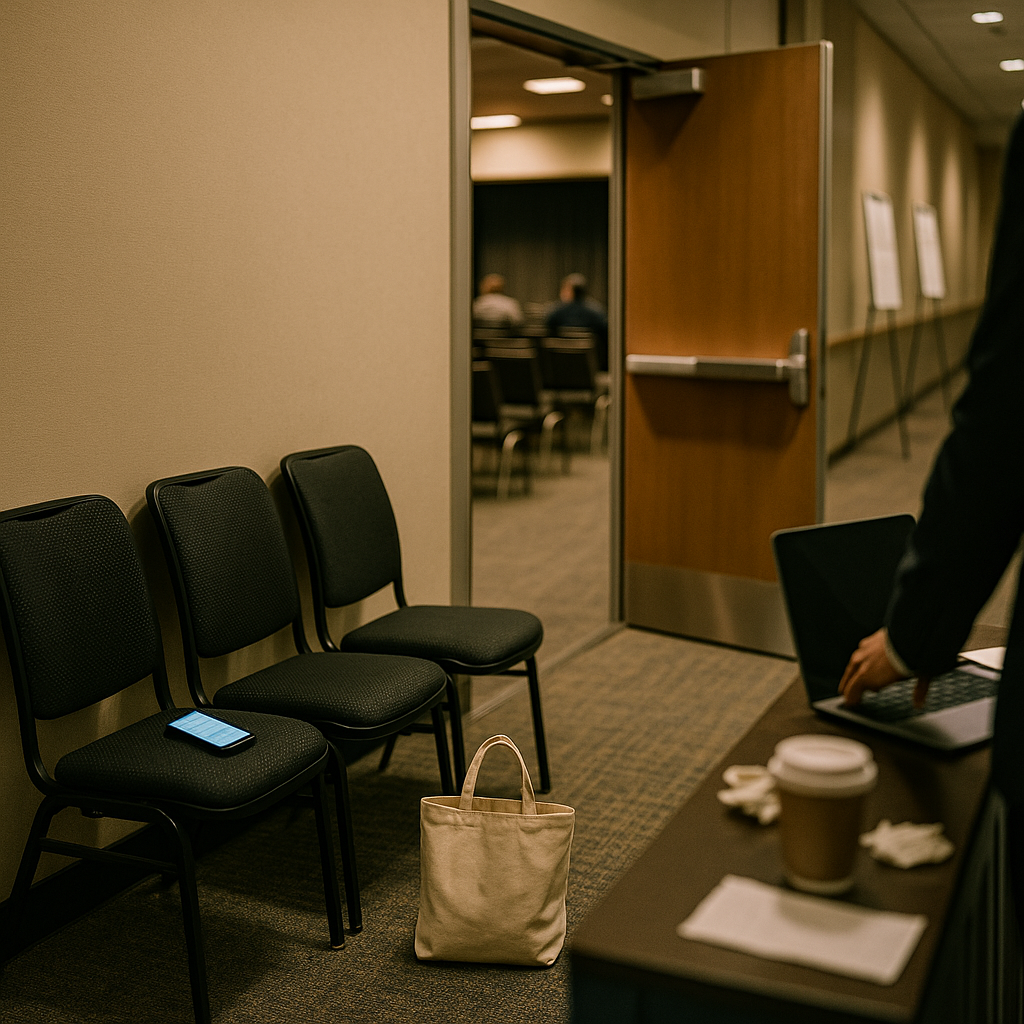
The symptom is familiar: people register for a conference session, then quietly disappear by the time the room opens on day two. The badge scan looks fine on paper, but the chair count keeps getting thinner as the agenda stretches across sessions, meals, and travel fatigue. That is the gap this work is really about, and it shows up clearly in multi-day, multi-session events with per-session reminders.
It is easy to blame content. A weak talk can hurt turnout, of course. But in many conferences, the bigger problem is not interest, it is memory under pressure. Someone may mean to attend three sessions, then lose track after a long hallway conversation, a room change, or a schedule that asks them to choose again and again. Registration is a promise made once. Attendance is a decision that has to be renewed all day.
That is why conference turnout behaves differently from a one-off webinar. The same gap shows up in live sessions and join rates, but a conference adds more moving parts. People are not just deciding whether to show up. They are deciding which room, which track, which lunch break, and whether they still have the energy to cross the building after lunch. A single confirmation email rarely keeps pace with that kind of drift.
The useful reframe is to stop treating the registration as the end of the job. It is the start of a sequence. For conferences, reminders work best when they carry context that matches the decision the attendee is about to make. The day-before note should not just say the session exists. It should remind them why this specific block matters, where it is, and what they need to do next. The morning-of message should help them act now, not later. A hallway or room-change reminder can matter as much as the original invitation.
This is where how the reminder sequence mechanism actually works, step by step becomes practical rather than abstract. The point is not to send more messages. It is to send the right ones at the right points in the attendance decision, so the sequence matches how conference behavior actually breaks down. Manual follow-up can cover a few high-value sessions, but it does not scale well when every track needs its own nudge, and every nudge needs to respect timing, sender identity, and relevance.
The same pattern appears in other settings, just with different stakes. A training room can empty out after lunch, and recurring class sessions, exam reminders, and orientation schedules face their own version of the same drift. People do not ignore the calendar because they are careless. They drift because the original yes was made in one context and the actual start time arrives in another.
That is also why calendar marketing matters here, not as a buzzword, but as a way to treat reminders as part of the event itself. When a sequence is built around the moments people actually check their schedule, it gives them a fresh chance to convert intent into action. Conference organizers tend to feel this most sharply in the middle of the event, when the first session went well and the second one has to earn attention all over again.
There is no clean fix for human fatigue, and there should not be a fantasy that reminders can make every seat full. But they can close a very specific gap: the one between a person saying they will be there and a person still deciding, an hour later, whether to walk across the hall. That is the part worth measuring, and it is the part a good sequence is built to handle.
For teams that run conference programs regularly, the real question is not whether people registered. It is whether the reminder structure helped them keep the promise they already made. That is a smaller question, but it is the one that decides whether a room feels planned for, or half-remembered.